
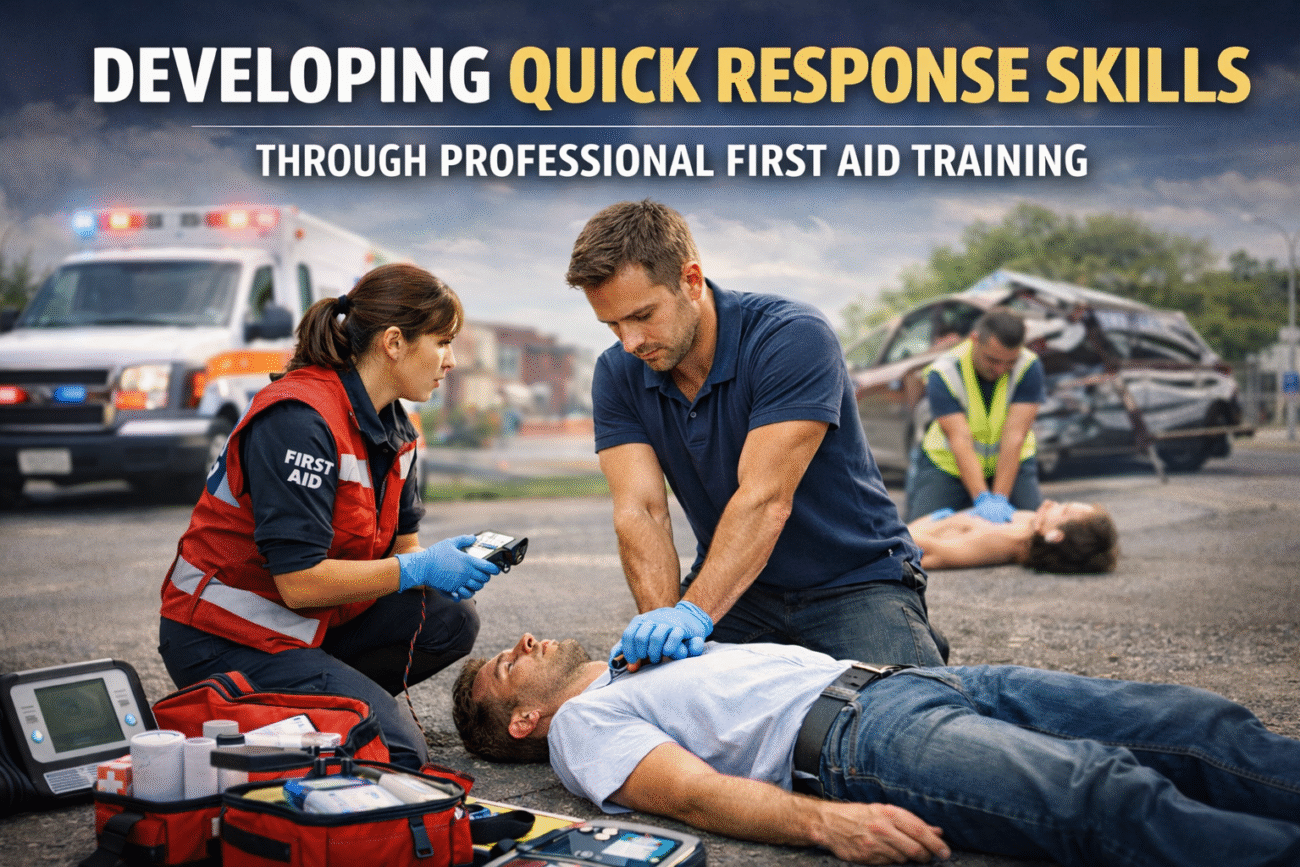
Emergencies frequently call for swift action, and being able to act fast can have a big impact on how a crucial situation turns out. Learning emergency response techniques through first aid Darwin training programs helps individuals develop the confidence and awareness needed to assist others during accidents or sudden health incidents. Professional instruction focuses on building practical skills that prepare participants to act responsibly while waiting for professional medical assistance.
Understanding The Importance Of Rapid Action
When injuries or medical emergencies occur, every second matters. A delayed response can sometimes make a situation worse, while prompt assistance may stabilise the person until help arrives. First aid education teaches participants how to recognise urgent signs such as difficulty breathing, severe bleeding, or unconsciousness.
Training also focuses on identifying environmental hazards before offering help. This ensures that the person providing assistance remains safe while supporting the injured individual. Understanding how to quickly evaluate the surroundings and the condition of the affected person is a key part of effective emergency response.
Learning To Assess Emergency Situations
Professional training introduces structured methods for evaluating an incident. Participants are taught to stay calm, observe the situation carefully, and determine what type of support is needed. These assessments guide the next steps in providing care.
In many training sessions, learners practice identifying symptoms and deciding which actions should be taken first. A First Aid Course Darwin residents attend often includes scenario-based exercises that help participants think clearly during stressful conditions. These simulations help build confidence and improve decision-making skills.
Developing Hands-On Emergency Techniques
First aid instruction includes practical techniques that can be used during common accidents and health emergencies. Participants learn how to manage bleeding, support someone with a suspected fracture, and respond to sudden illnesses such as fainting or severe allergic reactions.
Hands-on practice allows learners to apply these techniques in a controlled environment. Repetition helps participants remember the correct steps so that they can respond naturally if they encounter a real-life emergency. These exercises also help individuals understand how to remain calm while assisting someone who may be distressed or injured.
Improving Coordination During Critical Moments
Effective emergency response often requires clear communication and coordination with others nearby. Training programs encourage participants to practice giving instructions, requesting help, and working together during simulated emergencies.
For example, one person may be responsible for contacting emergency services while another provides care. This teamwork approach is commonly practised during a Darwin first aid course, where participants learn how to manage situations efficiently while ensuring the injured person receives proper support.
Increasing Awareness Of Safety Risks
First aid education also helps people become more aware of potential dangers in everyday environments. Individuals who have received training often develop a stronger sense of observation and risk recognition.
This awareness may help prevent accidents before they occur. For instance, recognising unsafe equipment, hazardous surfaces, or situations where someone appears unwell allows trained individuals to take early action. Preventing incidents is just as important as responding to them.
Supporting Preparedness In Everyday Life
Quick response skills are valuable not only in workplaces but also in daily activities. Situations such as a child falling during play, a coworker experiencing sudden illness, or a bystander choking in a public place can happen unexpectedly.
People who understand first aid procedures are better prepared to handle these events. They are able to respond calmly and provide support until professional medical assistance arrives. This ability can make everyday environments safer for families, friends, and colleagues.
A Skill That Builds Confidence And Responsibility
Professional first aid training encourages individuals to become more confident in their ability to assist others. The knowledge gained through structured learning helps remove uncertainty and replaces hesitation with informed action.
By developing quick response skills, individuals contribute to safer communities and workplaces. The ability to recognise emergencies, act responsibly, and provide immediate assistance is a valuable skill that benefits both individuals and the people around them.
