
Introduction
Project managers and engineers in public infrastructure, transportation, or specialized equipment procurement consistently face a central dilemma: how to source customized metal or plastic components that meet ultra-high reliability standards within stringent budgets and timelines. Standard parts or traditional supply chains often fail to accommodate unique design requirements, while general machine shops may lack the expertise and certifications for complex geometries, strict tolerances, and specialized materials like corrosion-resistant stainless steel. This mismatch leads directly to project delays, cost overruns, and quality risks.
This article examines how Computer Numerical Control (CNC) machining technology serves as a critical solution. By systematically analyzing the CNC machining process, material selection, global supply chain considerations, and the crucial evaluation of supplier credentials, it provides a clear framework for professionals managing public projects to secure mission-critical parts that perform reliably over their intended lifecycle.
What Unique Challenges Does Public Sector Procurement Face for Precision Parts?
Public sector projects—encompassing mass transit components, water treatment equipment parts, and public safety apparatus—impose exceptionally rigorous demands on their CNC machining parts. These requirements stem from the critical nature of Public Service: long, often decades-long lifecycles, full traceability, operation in extreme environments, and adherence to stringent regulatory and compliance standards. A component failure in a train braking system or a water purification valve can have significant safety and operational consequences. Therefore, the procurement process must prioritize proven reliability and verifiable quality over the lowest initial price.
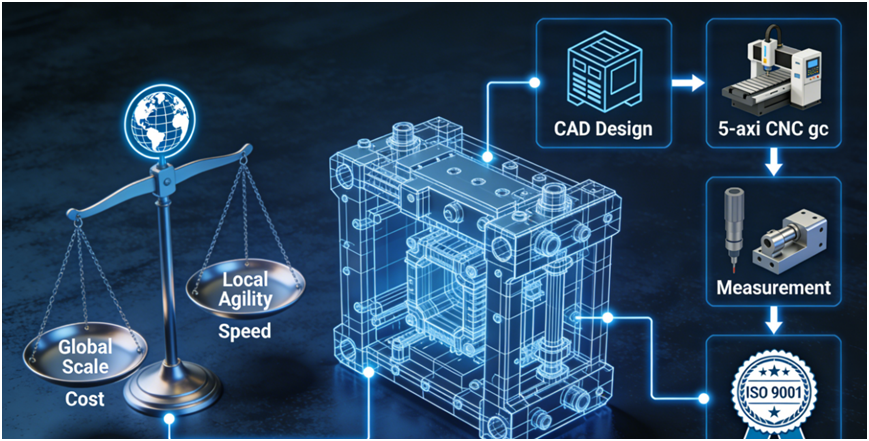
This decision is further complicated by global supply chain dynamics. Sourcing from CNC machining china often offers compelling scale and cost advantages, suitable for projects with longer lead times and high-volume needs. Conversely, partnering with a CNC machining USA supplier can offer benefits like streamlined communication, reduced logistical complexity, and faster response times for prototyping or urgent replacements. The core challenge lies in finding a CNC machining service that not only navigates this cost-service trade-off but also possesses the technical depth, quality systems, and project management rigor to consistently meet the multifaceted demands of public infrastructure and services.
How Does CNC Machining Meet the Stringent Demands for Precision and Consistency in Public Projects?
The digital nature of CNC machining is fundamental to achieving the repeatability and accuracy required for public assets that often need interchangeable parts in maintenance and deployment.
The Digital Backbone: From CAD to Finished Part
The entire CNC machining process begins with a digital 3D model. This file is translated into machine instructions (G-code), which drive the cutting tools with unparalleled consistency. This digital thread eliminates the variability inherent in manual operations, ensuring that the tenth part is identical to the first, a non-negotiable requirement for system interoperability and spare part inventory management.
Capability for Complexity: Multi-Axis Machining
For the intricate, often organic shapes found in modern public equipment enclosures, structural brackets, or fluidic components, multi-axis CNC machines are indispensable. Unlike simpler 3-axis milling, 4 and 5-axis machining allows the cutting tool to approach the workpiece from nearly any angle in a single setup. This capability enables the production of complex, monolithic parts that would otherwise require multiple assemblies, thereby enhancing structural integrity, reducing potential failure points, and often simplifying the final assembly process for the end-user.
l The Role of Advanced Equipment
Meeting the geometric dimensioning and tolerancing (GD&T) specifications on an engineering drawing requires more than a standard machine. It demands high-precision spindles, rigid machine frames, and sophisticated control systems that compensate for thermal expansion and tool wear. Suppliers offering tight tolerance CNC machining services invest in this advanced equipment, which is essential for producing parts that fit and function perfectly within larger assemblies, from precision actuators to sensor housings.
l Process Control and Measurement
Precision manufacturing is validated through equally precise measurement. Advanced metrology tools like Coordinate Measuring Machines (CMMs) and optical comparators are used to verify that every critical dimension falls within the specified tolerance band. This rigorous validation process ensures that components will integrate seamlessly, supporting the overall quality and longevity of public infrastructure, a principle supported by industry research on advanced manufacturing’s role in enhancing public goods.
How to Select a Reliable CNC Machining Service Provider for Public Projects?
Choosing the right manufacturing partner is a critical risk-mitigation step. A thorough assessment should cover three areas. First, evaluate technical and material proficiency, including machine range and inventory of alloys like stainless steel. Second, prioritize robust quality management systems, with foundational ISO 9001 or specialized IATF 16949/AS9100D certifications ensuring process control and traceability. Finally, ensure the supplier has strong project management and communication practices for proactive updates and design feedback. Their ability to deliver consistent quality on schedule is as vital as their technical capabilities.
For Complex Stainless Steel Components, Which CNC Processes and Certifications Are Particularly Critical?
Stainless steel is a mainstay in public projects due to its strength and corrosion resistance, but its machining properties—namely work hardening and lower thermal conductivity—present distinct challenges that demand specialized expertise.
Overcoming Machining Challenges
The tendency of stainless steel to work-harden during cutting can lead to rapid tool wear and poor surface finish if not managed correctly. Overcoming this requires a combination of the right tools, parameters, and cooling strategies.
l Tooling Selection
Using the correct CNC machining tools is paramount. Carbide tools with specialized wear-resistant coatings (like AlTiN) are essential to maintain a sharp cutting edge and manage heat. Tool geometry optimized for stainless steel helps in efficient chip evacuation, which is critical to prevent re-cutting of chips and subsequent surface damage.
l Optimized Machining Parameters
Successful stainless steel CNC machining services employ optimized strategies, including maintaining constant, appropriate feed rates to prevent work hardening, using high-pressure coolant to manage heat at the cutting interface, and selecting the correct spindle speeds. This disciplined approach ensures dimensional stability and the required surface finish for parts exposed to harsh environments.
The Assurance of Process Certification
For long-term public assets, selecting a supplier based solely on the initial CNC machine price quote is shortsighted. The true value lies in a supplier’s controlled processes, which mitigate the inherent variability in machining challenging materials. A certification like IATF 16949 is particularly relevant, as it mandates a process-focused approach, including Advanced Product Quality Planning (APQP), Production Part Approval Process (PPAP), and strict control plans. This systematic methodology ensures that every batch of stainless steel parts is produced with the same high level of consistency and quality, safeguarding the asset’s performance over its entire lifecycle—a concept aligned with a Total Cost of Ownership (TCO) analysis framework.
How to Balance Cost, Quality, and Lead Time for CNC Parts in Public Procurement?
Balancing the cost, quality, and speed of CNC machining parts requires a strategic approach. Key strategies include early supplier involvement for Design for Manufacturability (DFM) advice to optimize designs and reduce waste. Understanding volume-based cost structures is also crucial; while CNC machining china may offer scale for large batches, CNC machining USA suppliers can provide faster turnaround for urgent, smaller lots, mitigating project risk. Ultimately, partnering with a transparent CNC machining service that provides detailed quotes and flexible scheduling is essential to move beyond a transactional relationship and ensure project success.
Conclusion
In summary, successfully procuring precision components for public sector projects involves much more than comparing unit prices. It requires a deep understanding of the project’s technical demands and a partnership with a supplier that demonstrates proven strength inCNC machining technology, materials engineering, quality assurance, and professional project management. By adhering to the framework outlined—from defining challenges and understanding technical capabilities to rigorously vetting suppliers and optimizing procurement strategy—project leaders can significantly mitigate risk.
For those seeking a manufacturing solution for a public procurement project with complex designs and stringent standards, beginning with a professional Design for Manufacturability (DFM) analysis and a transparent quote is a prudent first step.
Author Biography
This article was authored by an industry expert with over 15 years of experience in precision manufacturing, focusing on providing complex engineering solutions and supply chain optimization advice for various sectors, including public sector projects.
FAQs
Q1: What is the most important certification for public sector procurement of CNC machined parts?
A: ISO 9001 is the foundational quality management system. For projects involving safety-critical components, more specialized certifications like IATF 16949 (automotive) or AS9100D (aerospace) provide additional assurance, indicating the supplier has rigorous process control and traceability capabilities.
Q2: How should one compare quotes for CNC machining services from different regions, such as China and the USA?
A: A total cost analysis, not just a unit price comparison, should be conducted. Factors to consider include raw material quality, adherence to process standards, logistics time and cost, tariffs, and communication efficiency. Requesting detailed quote breakdowns and quality control plans from suppliers is key to a fair comparison.
Q3: What are the main challenges in stainless steel CNC machining, and how are they overcome?
A: The primary challenges are its tendency to work-harden and its poor thermal conductivity, which can lead to rapid tool wear and part distortion. Overcoming these requires using specialized coated tools, optimizing cutting parameters, applying high-pressure coolant, and selecting a supplier with extensive stainless steel experience and corresponding process controls.
Q4: Is CNC machining economically feasible for small-batch, multi-variety prototypes for public projects?
A: Yes. Modern on-demand manufacturing makes small-batch CNC machining highly feasible. It eliminates tooling investment, allows for rapid design iteration, and is an ideal way to validate design functionality and manufacturability, effectively mitigating risks before larger-scale procurement.
Q5: Besides ISO certification, what other quality proofs should be reviewed when evaluating a CNC supplier?
A: One should request to see sample First Article Inspection Reports (FAIR), Material Test Certificates (MTC), full dimensional inspection reports, and successful case studies from similar industries (e.g., transportation, energy). An on-site audit or virtual tour of their production and inspection facilities is also an effective way to verify their practical capabilities.
