
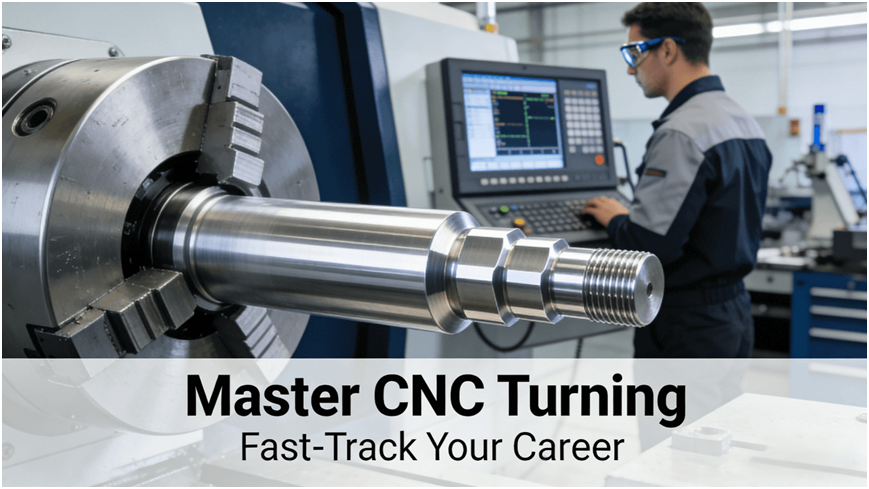
Introduction
Competition within the manufacturing sector is intensifying, and the industry’s demand for technical talent is no longer confined to simple machine operation. Today, enterprises seek professionals capable of comprehending intricate process chains, resolving complex challenges, and optimizing costs. Although many technicians are proficient in operating traditional lathes, their understanding of modern aluminium CNC turningis often quite limited — specifically, they frequently lack in-depth knowledge regarding the comprehensive advantages of this process, subtle nuances such as the impact of anodizing on performance, and its applications in high-value sectors like aerospace and medical technology. This knowledge gap not only hinders the career advancement of technical personnel but also undermines their decision-making capabilities when participating in high-end projects.
The root cause lies in traditional technical training, which often focuses on single-machine operation, neglecting a systematic understanding of material science, advanced processes like 5-axis machining, quality control systems (e.g., IATF 16949), and design collaboration (DFM). This creates a disconnect between individual skills and the high-end needs of modern industry. This article provides a deep dive into the complete aluminium CNC turning process chain, serving as both a technical guide and a career blueprint for becoming an indispensable expert.
What Are the Unbeatable Advantages of CNC Machining for Modern Aluminum Components?
The advantages of modern CNC machining for aluminum extend far beyond the generic claims of “high precision and speed,” translating into direct, measurable business outcomes. One of the most significant benefits is exceptional material utilization. Advanced nesting software and optimized toolpaths can achieve utilization rates over 95% for aluminum bar stock, dramatically reducing raw material waste and cost at the source. Furthermore, CNC machining delivers unmatched repeatability and consistency. Once a program is verified, the process can produce ten thousand parts that are virtually identical, a capability critical for assembly line efficiency and product reliability. This consistency is a cornerstone of lean manufacturing and scalable production.
1. Enabling Complex Geometries and Lightweighting
CNC technology liberates design from the constraints of traditional machining. It can produce complex, integrated geometries — thin walls, deep pockets, and intricate contours — that are impossible with manual methods. This capability is fundamental for topology-optimized, lightweight designsessential in aerospace, automotive, and robotics, where reducing mass directly improves performance and energy efficiency. The ability to consolidate multiple assembled parts into a single, stronger monolithic componentalso simplifies supply chains and boosts structural integrity.
2. The Data-Driven Efficiency Advantage
The value of CNC is quantifiable in Overall Equipment Effectiveness (OEE). Industry data, such as that from the Association for Manufacturing Technology (AMT), highlights how advanced CNC systems, with features like automated tool changers and pallet systems, drastically reduce non-cutting time. This leads to higher machine utilization, shorter lead times, and lower cost per part. For a manufacturing professional, understanding and articulating these OEE and total cost of ownershipmetrics is a powerful skill when justifying capital investments or optimizing production workflows.
3. A Foundational Skill for Advanced Roles
Therefore, a deep comprehension of these advantages is not just operational knowledge; it’s strategic literacy. It forms the basis for effective design for manufacturing (DFM)discussions with engineers, for accurately evaluating supplier capabilities, and for making data-driven decisions that affect product viability and profitability. Mastering this holistic view of CNC’s value proposition is what differentiates a machine operator from a manufacturing engineer or project leader, directly impacting career advancement and earning potential in the field of precision manufacturing careers.
How Does the Precision CNC Turning Process Transform a Raw Bar into a Critical Part?
The journey from a raw aluminum bar to a precision component is a meticulously choreographed sequence of engineering decisions, not just a series of cuts. It begins long before the machine starts, with CAD/CAM programming and strategic process planning. The programmer must define optimal toolpaths, factoring in the specific aluminum alloy grade (e.g., the free-machining 6061 vs. the high-strength 7075), each has distinct cutting characteristics, chip formation behavior, and thermal responses. The initial design of workholding fixturesis equally critical, as improper clamping can induce stress and deformation, especially in thin-walled aluminum parts, compromising the entire operation.
l The Science of Cutting Parameters and Tool Selection: Success hinges on the precise marriage of tooling and parameters. For aluminum, this means selecting tools with high-positive rake angles and polished flutesto ensure clean shearing and efficient chip evacuation. Cutting parameters — spindle speed, feed rate, and depth of cut — are not arbitrary; they are calculated to balance material removal ratewith the need to manage heat and prevent built-up edge. A true expert understands the “why” behind these choices, such as how increasing speed can improve surface finish but may require enhanced cooling, or how a specific feed rate can induce harmful harmonic vibrationsin a slender part.
l Implementing a Closed-Loop, Adaptive Process: Modern precision turning is an adaptive, data-informed process. In-process probing can verify part location and tool wear, allowing for automatic offset adjustments. High-pressure coolant systems are not just for cooling; they are engineered to blast away the gummy aluminum chips that can re-cut and mar the surface. The transition from roughing to finishing passesis deliberate, often leaving a small amount of stock for a final, light cut that ensures dimensional stability and superior surface integrity. This entire sequence is a closed loop of measurement, action, and verification.
l Building a Repertoire of Practical Knowledge: Therefore, mastering the CNC turning process is about building a mental library of cause-and-effect relationships. It’s knowing that a chattering sound indicates a need to increase speed or reduce the depth of cut. It’s recognizing that a poor surface finish on a 7075 part might require a different tool coating than one used for 6061. For readers seeking a deeper understanding of the complexities of aluminum alloy machining and the various surface finishing options available, please refer to this detailed guide: aluminium CNC turning services.
Why is Anodizing More Than Just a Color Finish for Aluminum Parts?
Anodizing is a transformative electrochemical process that fundamentally alters the surface properties of aluminum, creating a hard, integral oxide layer. To view it merely as a decorative coating is to miss its profound engineering value. Type II (standard) anodizing builds a corrosion-resistant layer and provides an excellent base for dyeing, but it is Type III (hardcoat) anodizingthat delivers game-changing performance. This process can create an oxide layer with a surface hardness exceeding that of tool steel (often over 60 HRC), dramatically improving abrasion and wear resistance for components like gears, pistons, and hydraulic parts.
1. Engineering Surface Properties for Demanding Applications
The benefits are multifaceted and application-specific. Beyond hardness, the anodized layer is an excellent electrical insulator, crucial for electronic housings. It is highly corrosion-resistant, protecting parts in marine or chemical environments. The porous nature of the oxide layer can be sealed with lubricants or used to enhance adhesive bonding. In medical devices, a properly specified and controlled anodize process can contribute to biocompatibility and cleanability, making it indispensable for surgical tools and implantable device housings.
2. The Technical Skill of Specification and Validation
Specifying anodizing is a technical discipline in itself. An engineer must determine the required coating thickness(e.g., 25μm for mild wear vs. 50μm+ for severe abrasion), the sealing method, and whether any post-dyeing is needed. They must also understand how anodizing affects dimensional tolerances, as the coating adds thickness. The ability to write a clear, comprehensive anodizing specification and then validate the results through microsection analysis and salt spray testingis a high-value skill that directly impacts product longevity and reliability.
3. Adding Strategic Value Through Surface Engineering
Thus, expertise in anodizing and other surface treatments is a powerful career differentiator. It moves a professional’s contribution upstream from mere fabrication to strategic value engineering. By specifying the right surface treatment, they can enable a part to perform in harsher environments, last longer, and meet stringent regulatory standards. This knowledge is especially valuable when working with or evaluating a precision aluminum parts supplier, as it allows for a more sophisticated assessment of their true capabilities beyond basic machining. It is a clear marker of advanced technical skills development.
How Do Industry Certifications Like IATF 16949 Translate to Part Quality and Career Trust?
In high-stakes manufacturing, quality certifications are not mere plaques on the wall; they are the codified DNA of a reliable production system. Standards like ISO 9001, IATF 16949 (automotive), and AS9100D (aerospace) provide a framework for process control, risk management, and continuous improvement. IATF 16949, for instance, mandates rigorous methodologies like Advanced Product Quality Planning (APQP) and Production Part Approval Process (PPAP). This means a supplier must fully define, validate, and document every step of the manufacturing process — from raw material to final inspection — beforeproduction begins, ensuring inherent consistency.
1. The Language of Data and Traceability: These systems operate on a language of data and evidence. They require Statistical Process Control (SPC)to monitor key dimensions in real-time, preventing drift rather than detecting bad parts later. They enforce full material and process traceability, so any component can be linked back to its source batch and machine run. For a professional, the ability to interpret SPC charts, First Article Inspection Reports (FAIR), and capability studies (Cpk) is essential. It’s the difference between saying “the parts look good” and proving “the process is stable and capable of producing ten thousand good parts.”
2. A Framework for Professional Problem-Solving: Certifications also provide structured problem-solving frameworks. IATF 16949 emphasizes tools like Failure Mode and Effects Analysis (FMEA)for proactive risk assessment and the 8D methodologyfor root-cause analysis and corrective action. Understanding and applying these tools transforms how a professional approaches a production issue — from a reactive fix to a systematic, preventive solution that strengthens the entire process. This mindset is highly valued in leadership roles.
3. The Credential for High-Trust Supply Chains: Therefore, fluency in these quality standards is a non-negotiable credential for career growth in advanced manufacturing. It signals to employers that you speak the language of global, high-reliability supply chains. Whether you are an engineer auditing a supplier, a quality manager ensuring compliance, or a production supervisor implementing controls, this knowledge demonstrates a systemic understanding of quality assurancethat is critical for roles in automotive, aerospace, medical devices, and other regulated industries. It is a direct pathway to increased responsibility and trust.
What Should You Look for When Evaluating a Custom Precision CNC Turning Service?
Selecting a manufacturing partner is a critical technical and business decision. A rigorous evaluation moves far beyond comparing price-per-part to assessing total capability and risk profile. The first area of scrutiny is technical capability and equipment. Examine the machine list: are the lathes modern, well-maintained, and equipped with features like live tooling and Y-axisfor complex work? What is their maximum turning diameter and length, and does it suit your part family? But machines are useless without expertise, so probe their process knowledge for specific materials, especially the aluminum alloys you use.
1. Auditing the Quality Management System
The most reliable indicator of future performance is a robust, certified quality system. Require evidence of certifications like ISO 9001 and IATF 16949. Ask to see examples of their process documentation, control plans, and inspection reports (FAIRs). Do they have advanced in-house metrologylike CMMs and surface roughness testers? How do they handle non-conforming material and implement corrective actions? Their answers will reveal whether quality is an ingrained culture or an afterthought. This due diligence is paramount for ensuring part consistency.
2. Assessing Collaboration and Project Management
Evaluate their potential as a collaborative engineering partner. During the quoting phase, do they provide substantive Design for Manufacturability (DFM) feedbackto optimize your design for cost and performance? What is their project management and communication structure? Is there a dedicated point of contact? How transparent are they with production updates and potential delays? A partner that engages proactively, asks insightful questions, and communicates clearly will reduce project risk and create more value than a vendor that simply executes an order.
3. Making a Strategic Partnership Decision
Therefore, the evaluation process should culminate in a strategic decision, not just a procurement choice. The right partner acts as an extension of your team, contributing manufacturing intelligenceto improve your designs, ensuring quality through systemic controls, and providing scalability from prototype to high-volume CNC turning. They mitigate risk and contribute to your product’s success. Choosing such a partner requires looking at the holistic picture of capability, system, and culture, ensuring a relationship that supports both immediate project needs and long-term business growth.To learn more about the capabilities of professional turning services, please visit custom precision CNC turning service page.
How Can Deep Technical Knowledge in Processes Like CNC Turning Fast-Track Your Engineering Career?
In the era of Industry 4.0, the most valuable professionals are “T-shaped” — possessing deep vertical expertise (like CNC turning) complemented by broad horizontal skills in design, quality, and project management. Deep mastery of a core process like Aluminium CNC Turningtransforms an individual from a task executor into a strategic problem-solver and value creator. This expertise allows you to bridge the gap between the design studio and the shop floor, translating ambitious concepts into manufacturable, reliable, and cost-effective realities.
1. Becoming the Critical Bridge in the Value Chain
This knowledge makes you the indispensable hub in product development. You can guide design engineers on tolerance optimization and feature designto avoid costly manufacturing pitfalls. You can accurately forecast project timelines and costs. You can lead root-cause analysis on production issues, speaking with authority to both management and machine operators. This ability to connect dots across disciplines — materials, mechanics, programming, and quality — is rare and highly sought after, positioning you for roles in manufacturing engineering, process development, and technical project management.
2. Commanding Premium Roles and Compensation
Specialized, high-value skills command premium compensation. An expert who can not only program a complex turning center but also specify the optimal tooling, develop a robust anodizing spec, and interpret Cpk data to guarantee process stability is far more valuable than a generalist. This expertise opens doors to roles in research & development, advanced manufacturing, and technical sales or sourcing for top-tier OEMs and suppliers. It provides a clear path from hands-on technical work into leadership, consultancy, or entrepreneurship.
3. Building a Future-Proof Career Foundation
Ultimately, investing in deep process knowledge is an investment in career resilience and growth. As automation increases, the demand for pure machine operators may fluctuate, but the need for engineers and technicians who understand the science behind the processwill only grow. This knowledge provides a durable foundation for lifelong learning and adaptation. By becoming a recognized expert in a critical manufacturing domain like precision turning, you build a personal brand of competence and reliability that fast-tracks your progression and ensures you remain at the forefront of the manufacturing evolution.
Conclusion
Mastering the intricacies of Aluminium CNC Turning and its associated ecosystem is about much more than learning to operate a sophisticated lathe. It is a comprehensive discipline encompassing materials science, precision engineering, surface technology, and systemic quality management. This deep, integrated knowledge is the key differentiator that separates technical staff from true manufacturing experts. In a competitive industrial landscape, this expertise is the foundation for career advancement, increased value creation, and professional indispensability. Investing in this mastery is not just a step up the ladder; it is a strategic move to build a resilient, rewarding, and future-proof career at the heart of modern manufacturing.
FAQs
Q: I mostly work with steel. Is learning about aluminum CNC turning still valuable for my career?
A:Absolutely. Aluminum machining presents unique challenges in thermal management, chip control, and achieving high surface finishes. Mastering it demonstrates a nuanced, material-specific expertise that is highly transferable and valued, especially in fast-growing sectors like electric vehicles, aerospace, and consumer electronics where aluminum is critical for lightweighting.
Q: What‘s the most common mistake you see in designs sent for aluminum CNC turning?
A:A frequent issue is neglecting DFM for thin-walled features, leading to tool deflection and scrap. Engaging in early DFM collaboration with your manufacturing partneris key. They can identify these risks and suggest optimizations like adding slight drafts or radii to ensure the design is both robust and economical to produce in volume.
Q: How does a certification like IATF 16949 benefit me as an engineer working with a supplier?
A:It establishes a structured, common language for quality and risk management. A certified supplier uses standardized processes for APQP, PPAP, and systematic problem-solving (e.g., 8D reports). This reduces miscommunication, ensures consistent part quality, and significantly lowers your project’s technical and scheduling risk, making supplier management more predictable and professional.
Q: For a new product prototype, should I always choose the highest-grade aluminum alloy?
A:Not necessarily. While 7075-T6 offers superior strength, it is more expensive and tougher to machine. The choice depends on the part’s function. For a non-structural bracket, 6061 is often more cost-effective. Prototyping with the intended material is ideal, but using a more machinable grade like 6061 for initial form/fit testing can be a smart strategy to reduce early-stage costs and accelerate design iteration.
Q: Can anodizing really be used for more than just aesthetic colors on aluminum parts?
A:Yes, fundamentally. While color is a benefit, the primary purposes are surface enhancement. Type II anodizing increases corrosion and wear resistance. Hardcoat (Type III) anodizing can create a surface harder than tool steel for high-wear components. It also provides electrical insulationand an excellent base for adhesive bonding, making correct specification a critical technical decision.
Author Bio
This article draws on the extensive, practical experience of manufacturing specialists dedicated to advancing precision engineering practices and career development within the industry. The insights connect deep technical process knowledge with clear pathways for professional growth. LS Manufacturingis a certified precision manufacturing partner that combines deep material and process mastery with robust quality systems, providing a real-world environment where the advanced skills outlined in this guide are applied daily to deliver reliable, high-performance turned components.
